Rivers to forests, life flows Safe communities, hope grows

A climate vulnerability hotspot

Vulnerability dimension
Combined views

Relative band

Band 1 (lowest)Band 2Band 3Band 4Band 5 (highest)
Coastal vulnerability
Source:
Azam and Rahman (2022). Assessing spatial vulnerability of Bangladesh to climate change and extremes: a geographic information system approach.doi.org/10.1007/s11027-022-10013-w

Select a district to filter the archive and open its panel.

A shifting Padma bank

Compare the 1991 and 2025 views

Climate impact in figures

13M+

Aerial view of homes and roads surrounded by floodwater.
Source

People affected by climate emergencies in 2024, following Cyclone Remal and the subsequent monsoon floods.

ObservedYear 2024

134M

A distant person crossing the open stone court under an umbrella during extreme heat.
Source

People at risk of declining living standards by 2050 due to rising temperatures and climate impacts.

Projection to 2050

13.3M

A mud hut stranded in rising river water at Mongla, with two distant figures beside a boat.
Source

Potential internal climate migrants by 2050 under climate impact scenarios.

Projection to 2050

A record of agency, not spectacle

Climate stories, in people’s words.

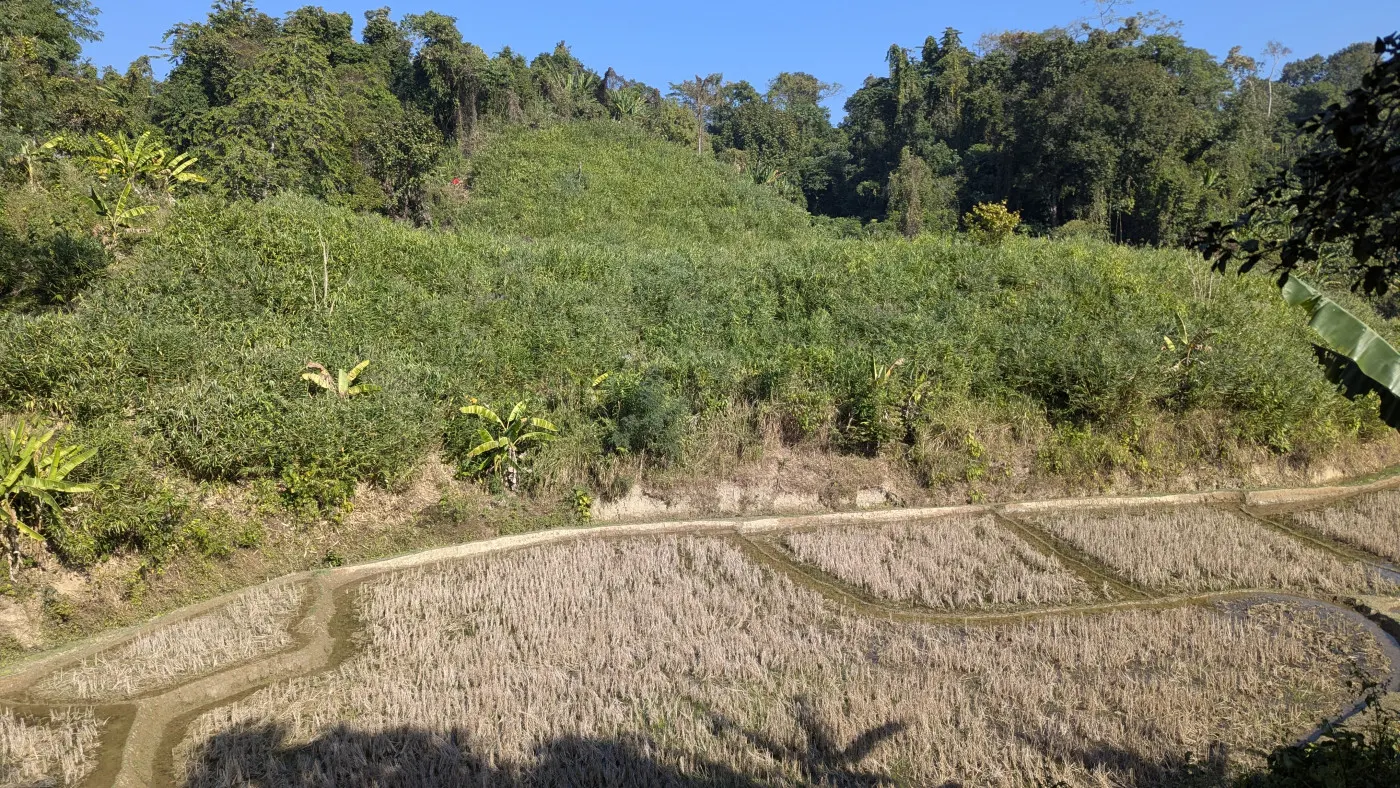
  • Terraced fields below the forested hills of the Pablakhali village common forest.
    Reported by
    Piroj Chakma
    Location
    Khagrachhari · Dighinala
    Climate issue
    Forest loss
    Date
    2026-01-27
    Record
    BD-KHA-0001

    UNDP Bangladesh story

    Pablakhali's 700-acre village common forest in Dighinala, Khagrachari, had been shrinking as the population grew, part of the deforestation, soil loss and biodiversity loss facing the Chittagong Hill Tracts.

    Terraced fields below the forested hills of the Pablakhali village common forest.
    Pablakhali village common forest. Photo: TBS

    What happened

    Pablakhali's 700-acre village common forest in Dighinala, Khagrachari, had been shrinking as the population grew, part of the deforestation, soil loss and biodiversity loss facing the Chittagong Hill Tracts. “Even five years ago, people were reckless,” says mouza headman Bikash Chakma.

    Who is affected

    About 1,200 families in eight villages depend on the forest, at least 500 of them in extreme poverty. “I had no choice; I had to survive. Now I try not to collect anything except fish, crabs, and vegetables,” says Piroj Chakma.

    What action is needed

    In 2017 the Khagrachari District Council declared it a village common forest and signed an agreement with UNDP's Canada-funded biodiversity and ecosystem restoration project. Villagers now patrol it every day and take only fish, crabs, bamboo shoots and vegetables; a conservation group got training and alternative livelihoods.
    See morePermanent record
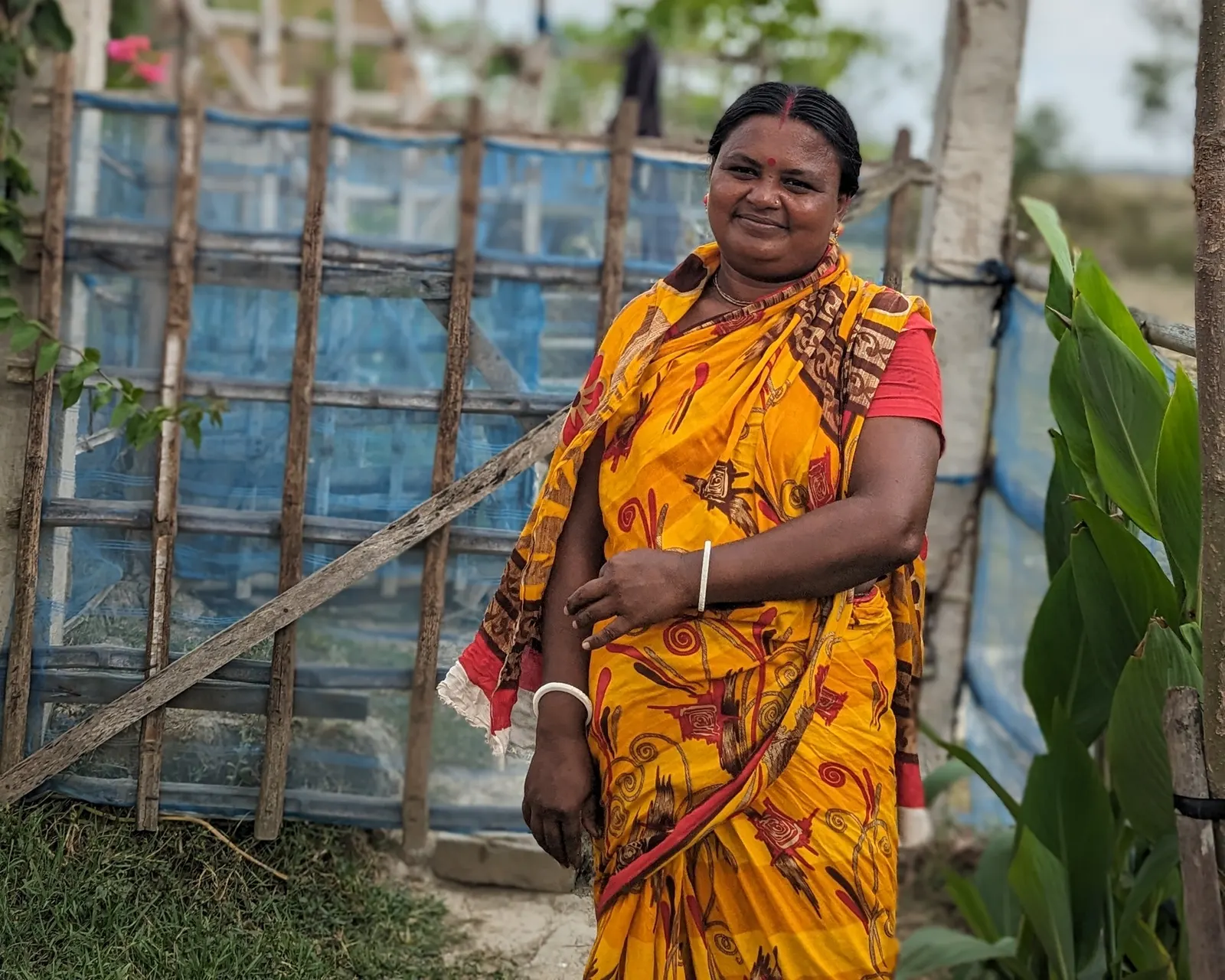
  • Suchitra Dhali standing in front of her home in Pankhali village, Khulna.
    Reported by
    Suchitra Dhali
    Location
    Khulna
    Climate issue
    River erosion
    Date
    2024-06-05
    Record
    BD-KHU-0001

    UNDP Bangladesh story

    In 2016 the Bhodra river and a tidal surge washed away Suchitra Dhali's two-room house on the embankment in Pankhali village, Khulna.

    Suchitra Dhali standing in front of her home in Pankhali village, Khulna.
    Photo: ©UNDP Bangladesh

    What happened

    In 2016 the Bhodra river and a tidal surge washed away Suchitra Dhali's two-room house on the embankment in Pankhali village, Khulna. Her family spent months in a shelter and borrowed money to get by.

    Who is affected

    Suchitra, about 40, her husband, a day labourer, and their daughters. “I am afraid of cyclone and floods as they disrupt everyone's life in the coast.”

    What action is needed

    Through LoGIC (the Government of Bangladesh, UNDP and UNCDF, funded by the EU, Sweden and Denmark) she received training and a starter grant. She now grows vegetables and raises 120 chickens, and in 2023 the family built a new house.

    See morePermanent record
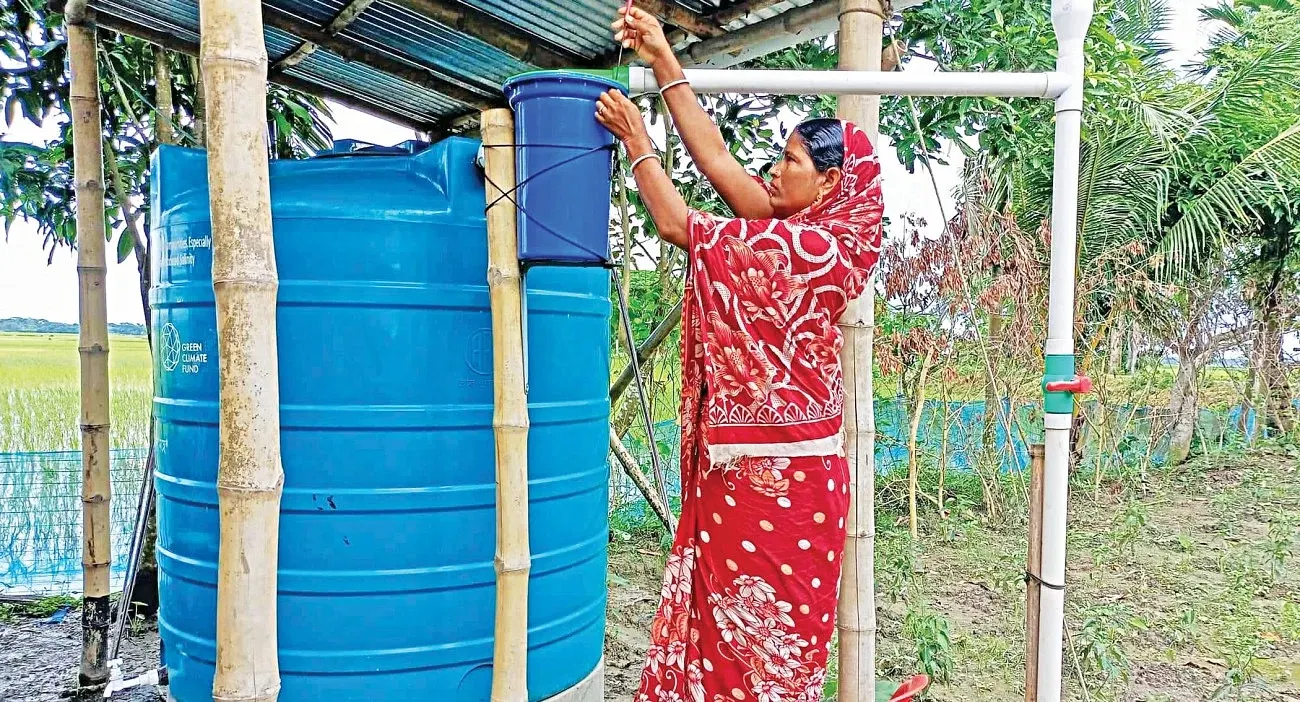
  • A woman pours water from a bucket into a blue rainwater tank beside her home.
    Reported by
    Archana Rani
    Location
    Satkhira · Assasuni
    Climate issue
    Salinity
    Date
    2023-03-23
    Record
    BD-SAT-0001

    UNDP Bangladesh story

    For 23 years Archana Rani, 36, fetched salty, arsenic-contaminated water for her family in Assasuni, Satkhira.

    A woman pours water from a bucket into a blue rainwater tank beside her home.
    Rainwater harvesting on the coast. Photo: UNDP Bangladesh

    What happened

    For 23 years Archana Rani, 36, fetched salty, arsenic-contaminated water for her family in Assasuni, Satkhira. Each trip meant an hour's walk and Tk 6 a pitcher, and it left her with back pain.

    Who is affected

    In these coastal upazilas women carry the water in 74% of households, and 63% of households had trouble getting it.

    What action is needed

    UNDP's GCA project, funded by the Green Climate Fund and the government, gave her a 2,000-litre rainwater tank; a single week's rain gave her 800 litres. The project has reached 13,308 households in Khulna and Satkhira.

    See morePermanent record

Open the full archive

Show us the climate crisis near you.

Share a Reel, a poster or your story. Your name stays private unless you choose to share it.

  • Share Reels of the climate crisis in your area

    A thirty second reel about one climate challenge where you live and the action it needs.

    Share a Reel
  • Share a poster you drew about the climate crisis

    One picture that shows a local climate challenge and how people can answer it.

    Share a poster
  • Share your story

    Speak or type what climate change is doing where you live. Your name stays private unless you choose to share it.

    Share your story